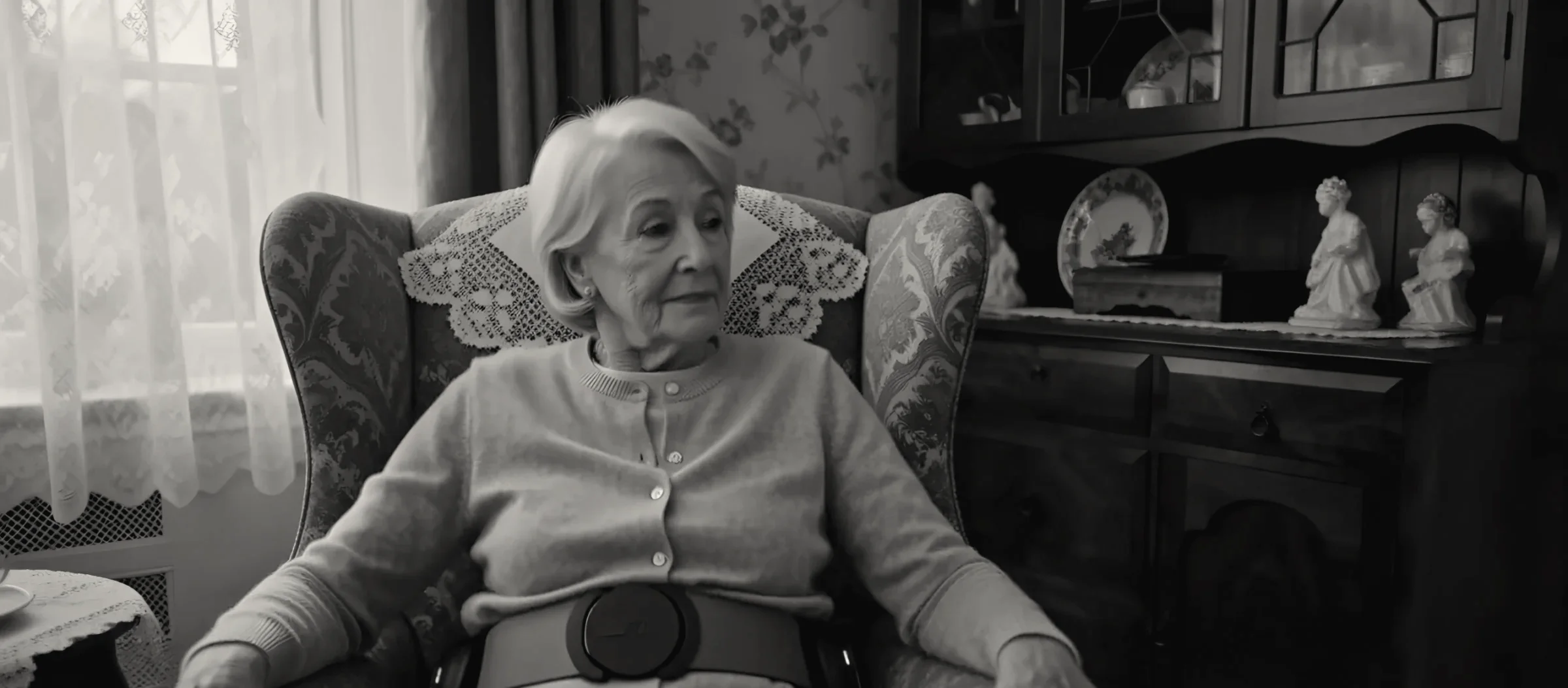
The pendant in the drawer.
In one study of people over 90, the alarm was there in almost every fall where someone was alone and could not get up. It was pressed in one in five. The reasons say more about design than about age.
In a study published in 2008, researchers in Cambridge, England, followed 110 people aged over 90 for a year and recorded every fall. Many lived alone, and many had a call alarm, usually a pendant or a call bell in the room. When someone fell alone and could not get up, an alarm was there 99 percent of the time. In 80 percent of the falls where it was there, it was not used. In the 38 falls where someone with an alarm lay on the floor for an hour or more, it was used once.1
The alarm was there. It was rarely pressed.
Falls in which a person aged over 90 was alone, could not get up and had a call alarm
Source: Fleming and Brayne, BMJ (2008). Participants from a 2002 to 2003 survey in Cambridge, England, followed for one year.
Why the button stays unpressed
Most of the reasons people gave were not technical. Some did not think they needed an alarm, because a relative lived nearby or they did not expect to fall. Some did not want to lose their independence, or worried that pressing it would end with a trip to hospital. Some had never got into the habit of wearing the pendant.1 In another study of older people who had fallen, cost stopped some from using an alarm effectively, and a few said they would not use one even if it were given to them.2
A related barrier shows up in research on hearing aids: the fear of looking old. In one study, stigma was tied to three things: a change in how people saw themselves, ageism, and simple vanity.3 A 2025 review of studies of older adults found that a pervasive worry was being seen as old or senile.4 Older people also notice when a product was not made with them in mind. In AARP's 2024 Tech Trends survey, 64 percent of Americans aged 50 and over said technology is not designed with their age group in mind.5
Not just alarms
In a 1993 US survey of adults with disabilities, almost a third of all assistive devices, 29.3 percent, had been completely abandoned. Abandonment was linked to four things: poor device performance, changing needs, devices that were too easy to obtain, and, first on the authors' list, users' opinions not being considered when the device was chosen.6 In a detailed study of 40 people aged 60 to 98 in their own homes, installed technologies met few of their needs, and some had been deliberately switched off.7
Voice has its own problem with age. A 2010 study found that speech recognition made about 10 percentage points more errors with older voices than with younger adult voices.8 Recognition has changed a lot since then, but a small 2022 study still reported the same friction: in a pilot of an exercise programme delivered through a smart speaker, older participants named voice recognition errors as a main barrier.9
The longest delay
Hearing aids are the clearest example of a technology that works and still goes unused. Two thirds of Americans aged 71 and over have some hearing loss, rising to 96 percent of those 90 and over, yet only 29 percent of them use hearing aids.10 In a US study that has followed older adults for 28 years, the estimated average wait from needing hearing aids to getting them was 8.9 years, and most candidates never got them during the study: only 213 of 857 did.11
Owning hearing aids is not the same as wearing them. Many people who are fitted with them leave them in a drawer, most often because they give too little benefit or are uncomfortable to wear.12
What people keep
The research on what works points the same way. In homes where technology did help, it was rarely a single device. It was what the researchers called bricolage: a mix of new and old things, adapted by the person or by someone who knew and cared about them.7 Older people's views of a technology often change once they have used it, and acceptance after installation was linked to ease of use, privacy, safety, companionship and how well it fit the home.13
The lesson for anyone building for older people is uncomfortable. A common thread in these studies is that the technology was designed for an idea of an older person rather than a real one, chosen for them rather than with them, and shaped so that wearing it announces frailty.
What we take from this
These findings are the closest thing we have to design rules. A device has to be worth wearing for its own sake, not only in an emergency. It should ask for as few new habits as possible, and the one it does ask for, putting it on, has to pay off every day. It should look like something you would choose, not something you were given. And it should be built with older adults, not only tested on them at the end.
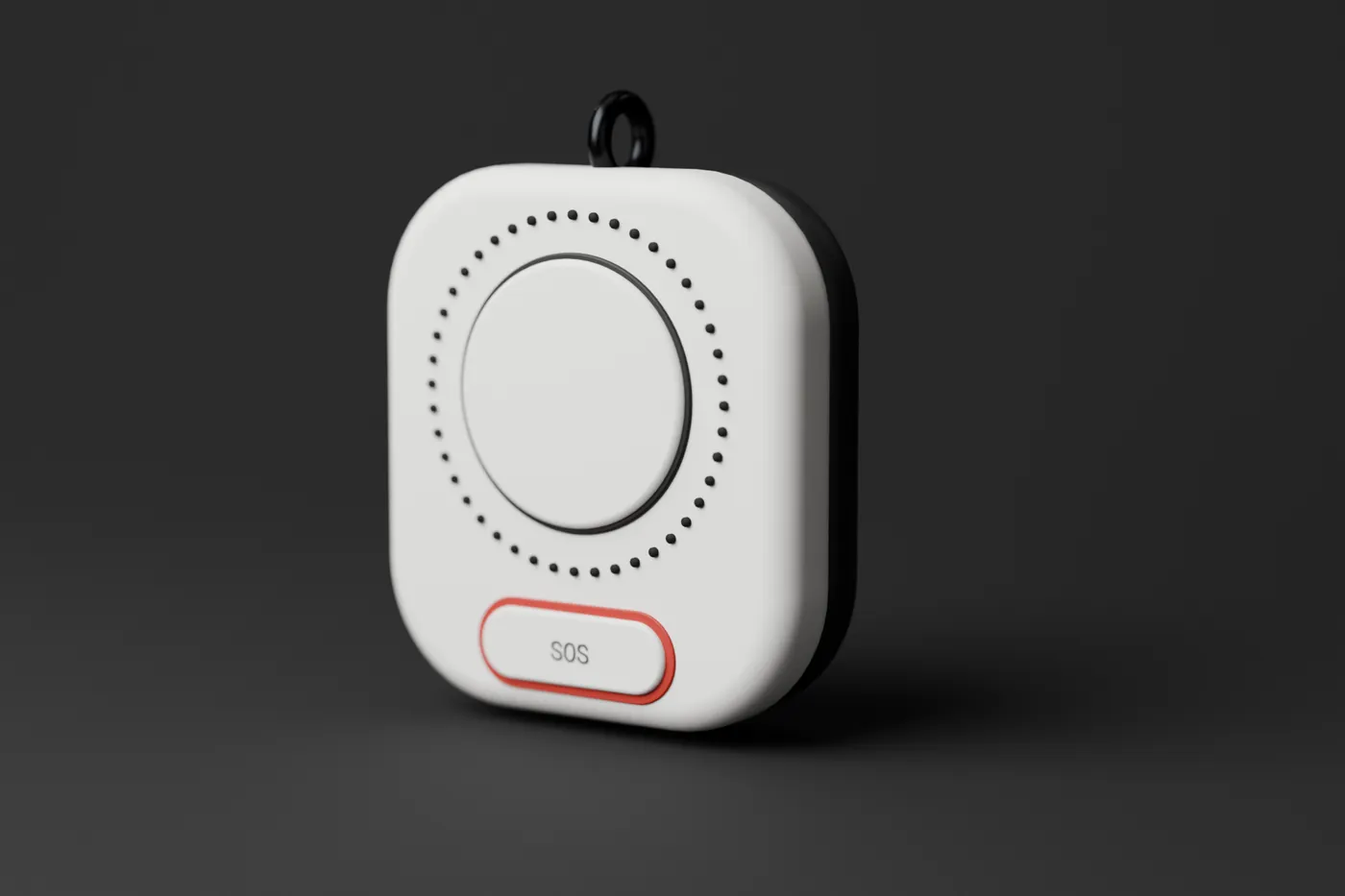
We have tried to follow those rules with Veema. The real test is whether people still wear it after a year.
These figures describe the need. They are not results or claims about Veema.
Sources
- Fleming and Brayne, BMJ (2008): 110 people aged over 90 in Cambridge, England, followed for a year (2002 to 2003 survey); call alarm present in 99% (141/143) of falls when alone and unable to get up, not used in 80% (113/141); in 38 long lies with an alarm installed, it was not used in 37; reasons included not perceiving it as relevant, wish for independence, fear of being taken to hospital, and not developing the habit of wearing the pendant.
- Johnston, International Journal of General Medicine (2010): 31 older fallers interviewed; cost prohibits some from being effective alarm users; a subgroup would not use an alarm even if provided.
- Wallhagen, The Gerontologist (2009): stigma of hearing loss related to alterations in self-perception, ageism and vanity.
- Liu et al., Otolaryngology Head and Neck Surgery (2025): scoping review; the pervasive theme among older adults was being perceived as old or senile.
- AARP, 2024 Tech Trends: 64% of adults 50+ said technology is not designed with their age group in mind (survey fielded in 2023).
- Phillips and Zhao, Assistive Technology (1993): 227 adults with disabilities; 29.3% of all devices completely abandoned; predictors: lack of consideration of user opinion in selection, easy procurement, poor device performance and change in user needs.
- Greenhalgh et al., Social Science and Medicine (2013): 40 people aged 60 to 98; installed assistive technologies met few needs, some abandoned and a few deliberately disabled; successful set-ups were bricolage adapted by the person or someone who knew and cared about them.
- Vipperla et al., EURASIP Journal on Audio, Speech, and Music Processing (2010): word error rates on older voices about 10% absolute higher than on adult voices.
- Jansons et al., BMC Geriatrics (2022): 12-week smart-speaker exercise pilot with 15 older adults; errors in voice recognition among key barriers.
- Reed et al., JAMA Network Open (2023): 65.3% of US adults 71+ have hearing loss, 96.2% of those 90+; 29.2% of those with hearing loss use hearing aids (2021 data).
- Simpson et al., Ear and Hearing (2019): 28-year US cohort; 857 hearing aid candidates, 213 adopted; estimated mean time from candidacy to adoption 8.9 years.
- McCormack and Fortnum, International Journal of Audiology (2013): many people given a hearing aid do not wear it; main reasons are too little benefit and discomfort.
- Tsertsidis et al., International Journal of Medical Informatics (2019): review of 23 studies; views change between pre- and post-implementation; post-implementation acceptance linked to ease of use, privacy, safety, companionship, social influence and fit with the home.