"It's just my age."
In a Keele University survey, 53% of adults over 50 with severe knee pain or disability had not seen their GP about it in the past year. In interviews, people explained that the pain was part of getting older and that little could be done.
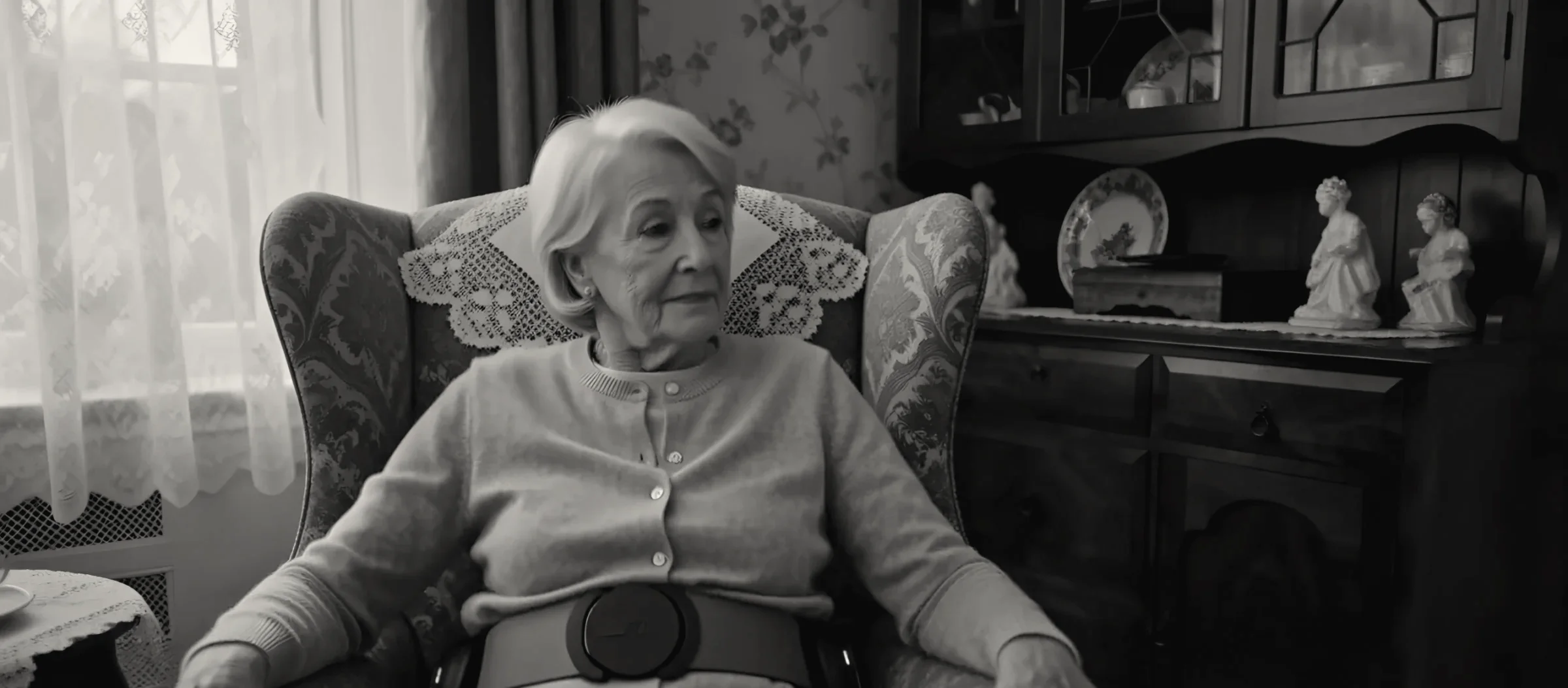
It starts on the stairs, usually. A dull ache on the way down, a knee that needs a moment before it agrees to the walk to the shops. Most people mention it to no one. If they do, it comes with a shrug and a familiar phrase: it's just my age.
Researchers at Keele University put numbers on that shrug. They surveyed 5,784 adults aged 50 and over at three general practices. Of those who answered, 49.5% had had knee pain in the previous year, half of it severe. Yet only about a third of people with knee pain had seen their GP about it in the past twelve months, and among those with severe pain or disability, 53% had not.1
Most knee pain never reaches a doctor
The pattern holds elsewhere. In a community study in South West England of 1,119 adults with hip or knee pain (average age 67.7), 55% had seen no health professional at all: no GP in the past year, no therapist in the past three months.2 What sent people to the doctor was less how much it hurt than how much it stopped them doing.2
A second Keele study followed 1,797 people over 50 with knee pain who had never consulted about their knee. Over eighteen months, 271 of them (15%) did, roughly one in ten a year. Pain severity barely predicted who would go. Among the most severely affected, people who were depressed were less likely to consult, not more.3
What people say about why they stay home
When the Keele team interviewed people living with knee pain, the reasons for staying away were consistent: knee pain is part of normal ageing, little effective treatment exists, and painkillers bring side effects.1 "I take it that there's nothing you can do about it," said one man. "I don't think there is anything they can do really," said a woman. Another explained that her doctor already knew about her bad knee, "so there's no point in going down again, just for that."1
"I find this frustrating at times, but accept it as one of the disadvantages of growing old." (A diary entry from the same study)1
Expectations about the doctor matter too. In a 2015 study of 863 people aged 50 and over with hip, knee or hand pain at four UK practices, 17% attributed their joint pain to ageing.4 Respondents then chose between imaginary consultations. The single biggest factor in deciding whether to go was how much the pain disrupted daily life. The second was whether they expected the GP to treat it as "a legitimate problem" or as "part of the normal ageing process that one just has to accept".4 Faced with the choice, 65% would rather consult about a less disruptive problem with a GP expected to take it seriously than about a more disruptive one with a GP expected to call it age.4
What decides whether people see the GP about joint pain
Relative importance of each factor in a choice experiment with 863 UK adults aged 50 and over with hip, knee or hand pain
Source: Coxon et al., BMJ Open (2015)
When the doctor says it too
Those expectations have some basis. In a small study, Zoe Paskins and colleagues video-recorded 19 osteoarthritis consultations with 15 GPs, and found that the doctors preferred the words "wear and tear" to "osteoarthritis", and only two GPs used the word osteoarthritis at all. GPs tended to normalise the symptoms as part of life, and one patient left assuming the GP had "nothing more to offer".5 The phrase lands heavily. "With him telling me it was wear and tear that meant they couldn't do anything," one man told the earlier Keele researchers, "but I don't know whether they can or not."1
Even people who consult often leave without the advice guidelines put first. In the United States, 61.0% of adults with arthritis reported in 2014 that a health professional had counselled them about physical activity or exercise; among those aged 65 and over it was 60.4%, which leaves about four in ten without that conversation.6 In a UK survey of 4,059 adults aged 45 and over who had consulted for joint pain, only 9.4% had tried weight loss in the previous year and 3.8% aerobic fitness training. People aged 75 and over were less likely than younger people to have used exercise.7 In a separate survey of 835 GPs, 87% said they used exercise for chronic knee pain, but only 11% described starting it in line with the best evidence.8
The cost of keeping quiet
Silence does not make the knee hurt less. In the Keele survey, people with knee pain reported severe difficulties with housework, bending, bathing, climbing stairs and getting in and out of a car; 30% reported severe or extreme problems with heavy domestic duties, and 25% severe or extreme pain going up or down stairs.1
Over time the world can shrink. Among 1,802 adults aged 50 and over with osteoarthritis, 13.5% reported that their mobility outside the home had become restricted within three years, with the highest risk among people who found walking hard and lived among hills and steep slopes.9 In a six-country European study of older adults, those with clinical hip or knee osteoarthritis were 1.47 times as likely as those without it to become socially isolated over the following 12 to 18 months, after allowing for age, sex and country.10
Not simply the price of age
Age is real: knee pain does become more common with each decade, as we describe in Knee pain, decade by decade. But "it's just my age" is often doing a different job: closing a conversation before it starts. The authors of the 2015 study concluded that expecting the GP to see joint pain as normal ageing was a strong disincentive to seeking help, one that could outweigh other aspects of the quality of care.4 The Keele researchers saw missed chances for help such as lifestyle advice.1
None of this means every ache needs a clinic. It means that a sore knee at 75 deserves the same curiosity as one at 45, and that "what can be done?" is a fair question at any age.
At Veema we work on mobility at home because that is where most knee pain is lived: quietly, between the kitchen and the stairs. Whether an exoskeleton can help people keep moving there is a question only studies with older adults can answer.
These figures describe the need. They are not results or claims about Veema.
Sources
- Jinks, Ong and Richardson, BMC Musculoskeletal Disorders (2007): Survey of 5,784 adults 50+ at 3 general practices; 12-month knee pain prevalence 49.5%, half severe; 33% of those with knee pain visited GP in last 12 months; 53% with severe pain or disability had not; reasons: normal ageing, little effective treatment, medication side effects; 30% severe/extreme problems with heavy domestic duties; 25% severe/extreme pain on stairs; interview and diary quotes.
- Thorstensson et al., BMC Musculoskeletal Disorders (2009): 1,119 adults 35+ with hip or knee pain, mean age 67.7, South West England; 55% had seen no health care professional; disability more important than pain severity for help-seeking.
- Jordan, Jinks and Croft, British Journal of General Practice (2006): 1,797 adults over 50 with knee pain and no prior knee consultation; 271 (15%) consulted over 18 months, about 10% a year; pain severity weak predictor except chronicity; depression OR 0.6 for consulting in the severely affected.
- Coxon et al., BMJ Open (2015): 863 respondents aged 50+ (mean 70) with hip, knee or hand pain at 4 UK practices; 17% attributed joint pain to ageing; relative importance: disruption 31%, perceived GP attitude 24%, thoroughness 14%, management options 13%, comorbidity 13%, pain characteristics 5%; 65% preferred the legitimising GP for a less disruptive problem.
- Paskins et al., Annals of Family Medicine (2015): 19 OA consultations with 15 GPs; GPs used wear and tear in preference to osteoarthritis; only 2 GPs mentioned osteoarthritis; GPs normalised symptoms as part of life; a patient assumed the GP had nothing more to offer.
- Hootman et al., MMWR (2018): Provider counselling for exercise among US adults with arthritis 61.0% in 2014 (51.9% in 2002); 60.4% among those 65+; nearly 40% not counselled.
- Healey et al., BMC Musculoskeletal Disorders (2018): 4,059 adults 45+ who consulted for joint pain; past-12-month use: weight loss 9.4%, aerobic fitness training 3.8%; age 75+ less likely to use exercise; conclusion on under-use of exercise in older people.
- Cottrell et al., BMJ Open (2017): 835 responding GPs; 87% reported using exercise for chronic knee pain; only 11% initiated it in line with best evidence.
- Rantakokko and Wilkie, BMJ Open (2017): 1,802 adults 50+ with osteoarthritis; 13.5% onset of restricted mobility outside the home at 3 years; walking disability plus hills and steep slopes OR 7.66.
- Siviero et al., Journal of the American Geriatrics Society (2020): EPOSA, six European countries, 1,967 older adults; clinical hip and/or knee OA associated with 1.47 times increased risk of incident social isolation (95% CI 1.03 to 2.09) over 12 to 18 months, adjusted for age, sex and country.