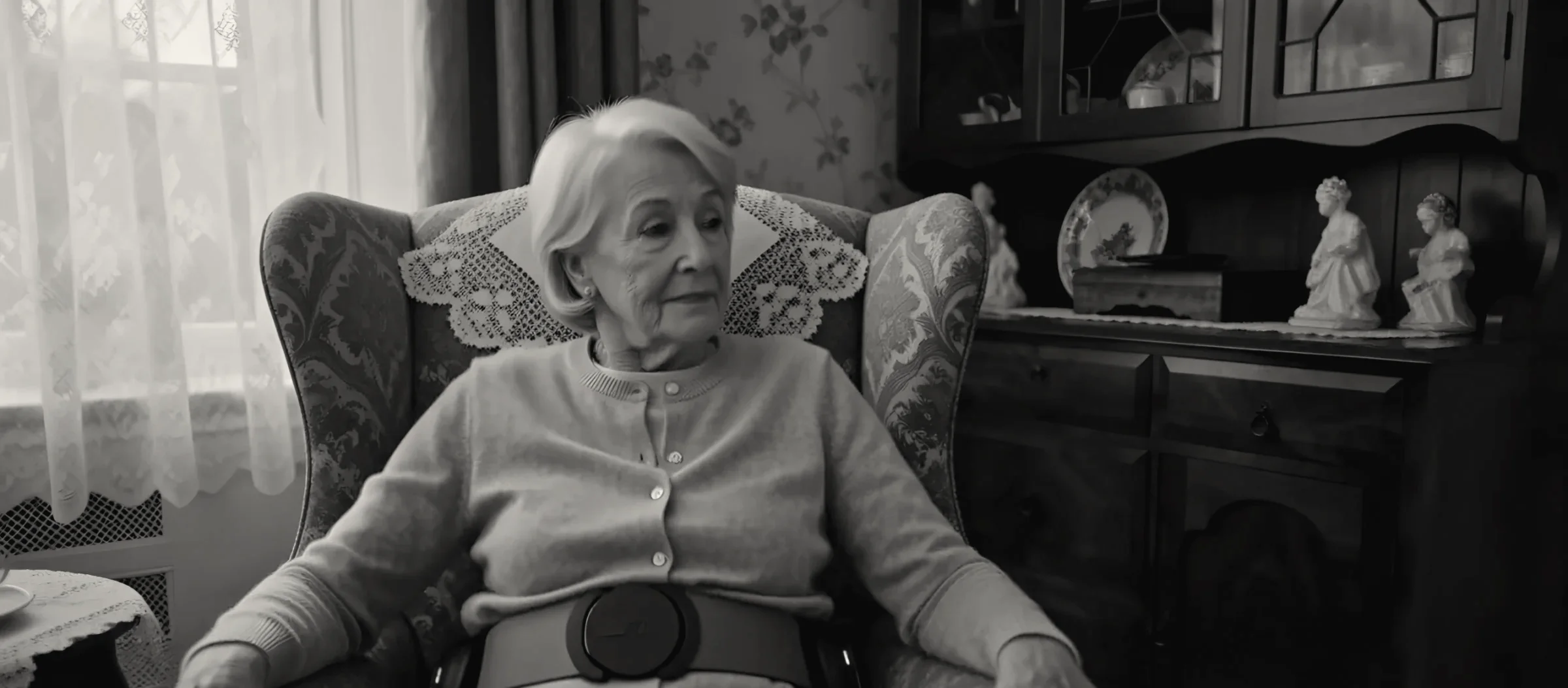
The other patient.
More than half of family caregivers say they had no choice. What the role costs them, in hours, money and health, on both sides of the Atlantic.
More than half of America's family caregivers say they had no choice about taking on the role.1 For many, it starts with a phone call: a fall, a bad week, a neighbour who noticed the curtains stayed closed. From then on someone is on call, driving over, sorting the pills, booking the appointments and lying awake doing the maths on what comes next. The ones who had no choice report almost twice as many bad mental health days a month as the ones who did: eight against four and a half.1
Who they are
Usually it is a daughter, a son or a spouse. In 2025, 63 million American adults, about one in four, were family caregivers for someone with a complex health condition or disability, up from 43.5 million in 2015. Part of that rise reflects a change in method: the 2025 survey counted, for the first time, family caregivers who receive some pay.2 About 51 million care for someone aged 50 or older,3 and the person they care for is most often a parent: 40 percent look after a parent and another 7 percent a parent-in-law.2
Most are women, 61 percent.2 Almost 17 million are in the so-called sandwich generation, caring for an adult while also raising children; their average age is 42.4
Time, money and work
Caregivers spend an average of 27 hours a week on care, and nearly a quarter spend 40 hours or more, the equivalent of a second full-time job. On average they have been in the role for five and a half years.2
Unpaid does not mean free. A 2021 AARP survey found that family caregivers spent $7,242 a year of their own money on care, on average about a quarter of their income.5 One in three caregivers has stopped saving.2 Of those who have worked while caregiving, more than half have had to go in late, leave early or take time off, and 9 percent have given up working entirely.2
AARP puts the economic value of unpaid care for adults in the US at $1.01 trillion in 2024, more than total Medicaid spending.6
The body and the mind
Nearly two thirds of caregivers report moderate or high emotional stress, and 45 percent report moderate or high physical strain. One in five rate their own health as fair or poor, and 24 percent say they feel alone, slightly up from 21 percent in 2020.12
What caring costs the carer
Share of US family caregivers, 2025
Source: AARP and National Alliance for Caregiving, Caregiving in the US 2025.
Those who had no choice also feel more alone: 34 percent feel isolated, against 12 percent of those who chose the role.1 The person looking after the patient is often becoming one.
Europe faces the same pressures
Eurocarers, the European network of carers' organisations, estimates that informal carers provide around 80 percent of long-term care in Europe.7 The European Commission puts the value of that informal care at about 2.5 percent of EU GDP, more than public spending on long-term care. It also found that almost half of people aged 65 or older with long-term care needs do not get enough help.8
As in the US, the weight falls on women. In 2019, among inactive women aged 25 to 49 in the EU, 32.6 percent said caring responsibilities were the reason they were not in work, against 7.6 percent of men.8 In the UK, the 2021 Census counted 5.8 million unpaid carers, whose care is valued at an estimated £184 billion a year.9 Carers UK polling in 2026 estimated that 1.1 million people had left work to care in the previous two years.10
And the need is growing. The number of people aged 80 and over in the EU is projected to almost double, from 26.6 million in 2020 to 49.9 million in 2050.11
What would help
Respite care shows a clear gap: 39 percent of US caregivers say it would help, but only 13 percent use it. Only 32 percent have any paid help, and among those performing medical or nursing tasks at home, just 22 percent received any training.2
Most caregivers live close by: about three in four of those caring for someone aged 50 or older live with them or within 20 minutes.3 But across all caregivers, more than one in ten live an hour or more away,2 and for them the worry rarely switches off. Every unanswered call is a small emergency.
When we talk about helping older people stay at home, we are talking about two people: the parent, and the son or daughter who worries between visits. We are designing Veema with both of them in mind.
These figures describe the need. They are not results or claims about Veema.
Sources
- AARP and NAC, Caregiver Health (Caregiving in the US 2025): 56% felt they had no choice in taking on the role; they report 8 vs 4.5 poor mental health days a month and 34% vs 12% feeling isolated; nearly two-thirds of caregivers report moderate or high emotional stress; 45% moderate or high physical strain.
- AARP and National Alliance for Caregiving, Caregiving in the US 2025: 63 million family caregivers (1 in 4 adults) vs 43.5 million in 2015; the 2025 survey includes paid family caregivers for the first time; 40% care for a parent, 7% a parent-in-law; 61% women; 27 hours a week, 24% 40+ hours; 5.5 years in the role on average; one-third stopped saving; of those working while caregiving 56% adjusted their schedule and 9% gave up work; 64% moderate or high emotional stress; 1 in 5 fair or poor health; 24% feel alone (21% in 2020); respite 39% would help, 13% use; 32% paid help; 22% of those performing medical or nursing tasks received training; 11% live an hour or more away.
- AARP and NAC, Caregiving in the US 2025: Family Caregivers for Older Adults: 51 million care for someone 50+; 74% live with or within 20 minutes of the person they care for.
- AARP and NAC, Sandwich Generation Caregivers (2025): nearly 17 million caregivers of an adult (29%) are also raising children; average age 42.
- AARP, 2021 Caregiving Out-of-Pocket Costs Study: typical annual out-of-pocket spending $7,242; on average about 26% of income (data collected 2021).
- AARP Public Policy Institute, Valuing the Invaluable 2026: estimated economic value of unpaid care for adults $1.01 trillion in 2024 (59 million caregivers, 49.5 billion hours at $20.41 an hour), more than total Medicaid spending ($932 billion).
- Eurocarers, About carers: states that 80% of long-term care in Europe is provided by informal carers.
- European Commission, European Care Strategy, COM(2022) 440: value of informal long-term care around 2.5% of EU GDP, higher than public expenditure on long-term care; almost half of people 65+ with long-term care needs have unmet needs; 32.6% of inactive women aged 25 to 49 cite care responsibilities vs 7.6% of men (2019).
- Carers UK, Key facts and figures: 5.8 million unpaid carers in the UK (Census 2021); economic value of unpaid care £184 billion a year.
- Carers UK, Balancing work and unpaid care (2026), reported by Eurocarers: polling estimate: 1.1 million people left work to provide unpaid care in the past two years.
- Council of the EU, Recommendation on access to affordable high-quality long-term care (2022): people aged 80+ in the EU projected to rise from 26.6 million in 2020 to 49.9 million in 2050.